
Well, feels like it’s been quite a while since our last update — especially considering the events in our last post were already a week or two (or three) old by the time we wrote and posted them. So we’ve got a bit of catching up to do!
As we mentioned in Chapter 3, the week of October 1 is a national holiday commemorating the founding of the country in 1949. This year is of special note, as China celebrates its 70th birthday. The country observes the holiday with a full week without work or school. (Of course, not everyone has the week off; those leading tours, selling food, or otherwise self-employed seem to continue working on their own schedule). Many people travel, but many more relax at home because crowds can grow ridiculously large, especially in cities, in tourist spots, and on public transportation. If you’re interested, check out my post from two years ago about this week: https://ccstoltzfus.mennonite.net/iii/. Actually, this week mirrors that week in multiple ways. Weird!
We were fortunate to get an opportunity for both relaxation and travel. We spent the holiday itself with our friends Wang Ying, Duan, and Libby, as well as Duan’s extended family at their family farm. His parents live in an old, country home – homely and comfortable but bare by American standards – not too far outside the city, and Wang Ying and Duan often visit on weekends. The family welcomed us warmly, and we watched the last part of the national parade with them. (We skipped the first two or three hours). Wang Ying told us the adults in the room were remembering older, darker times while we were watching – mentioning the hunger and scarcity that characterized the Cultural Revolution and surrounding era.
(Personally, I was startled that they were talking about that infamous period; I’ve heard so much about how little people talk about it (ironically enough). Instances like their conversation make me wish more than ever that I understood more Chinese.)
They fed us well, took us on a tour of the farm, and watched as (some of us) played with the kids. The gathering was larger than you might expect – Duan has 4 or 5 siblings, and most of them are married and have at least one child, and a few aunts and uncles were there. They really wanted us to stay to play Mahjong, but their machine was broken and they didn’t get it fixed before we left. We also wanted to get back to town to meet up with Emma, the 6th person in our group of Mennonite Partners in China teacher-interns, who’s teaching by herself in another town. She joined us for the next part of our week…
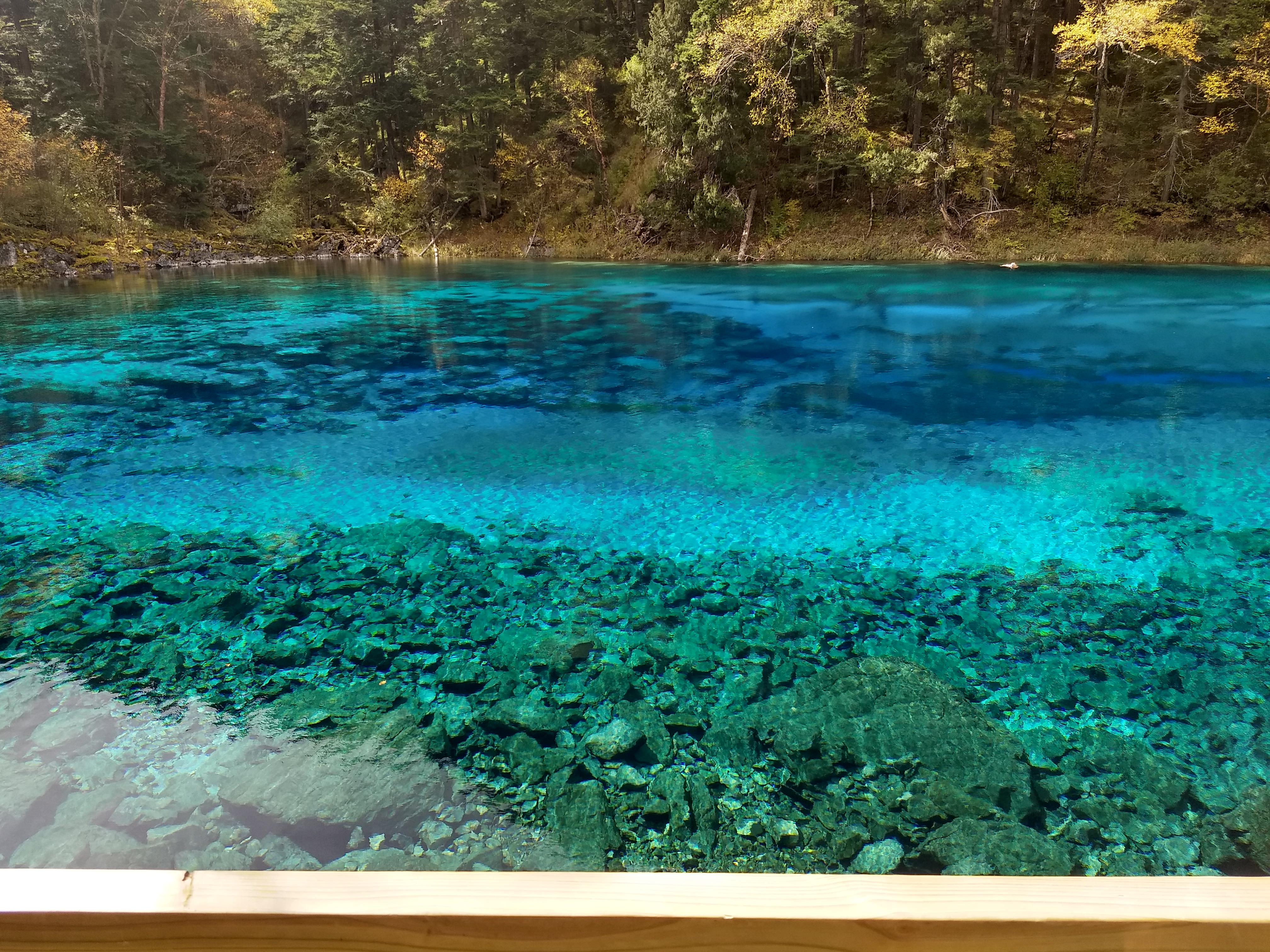
We were also thrilled to travel for the first time since we’ve arrived. We chose a tourist-y option, after going through a multitude of possibilities and some tough indecision by all in our group, and spent three days with a Chinese tour company visiting a famous Chinese national park called JiuZhaiGou (九寨沟). The region is known for its deep blue, crystal-clear water as well as Tibetan villages, and we were excited for a chance to visit some beautiful scenery in a more remote part of our province. The experience was intensified – not degraded, just made more interesting – by the all-day bus ride there and back (2/3 of the trip spent traveling!), the completely Chinese tour information, the bad food (I know, in China?!), and the shameless attempts to sell us stuff on the last day.
The first day basically boiled down to the bus. We got on at 6 AM and didn’t get off until after 7 PM, with stops almost every hour. We couldn’t believe how often we stopped, though I for one took advantage of the many opportunities to stretch my legs. Speaking of things we couldn’t believe, our tour guide (who was great, and very considerate to the six foreigners traveling with the group, going so far as to repeat instructions to us separately – and slowly – and give us some information in English) spoke for at least 5 of those 13 hours on the bus. We would get back on after a stop, and she would begin speaking, and we assumed she was welcoming everyone back on, or giving instructions or something, and then she’d continue for 45 minutes! We still don’t know what sorts of information we were missing.
Occasionally we could pick out some parts of the things we were hearing – now and elsewhere in the trip – but we certainly couldn’t follow everything thoroughly, and eventually I would give up, exhausted and ready to rest my mind.
Day two was the highlight of the trip, and the reason we went in the first place. We spent the entire day, essentially from dawn to dusk, exploring the national park on our own as a group. JiuZhaiGou is composed of three separate valleys, each of which has a series of named attractions connected by a long boardwalk. (Five-Color Lake, Primeval Forest, and the like). We took a bus as far as we could down the park (away from the entrance), then started our trek back. We timed lunch almost perfectly, arriving in the middle of the park (where you can buy food) right around lunch time before continuing our walk.
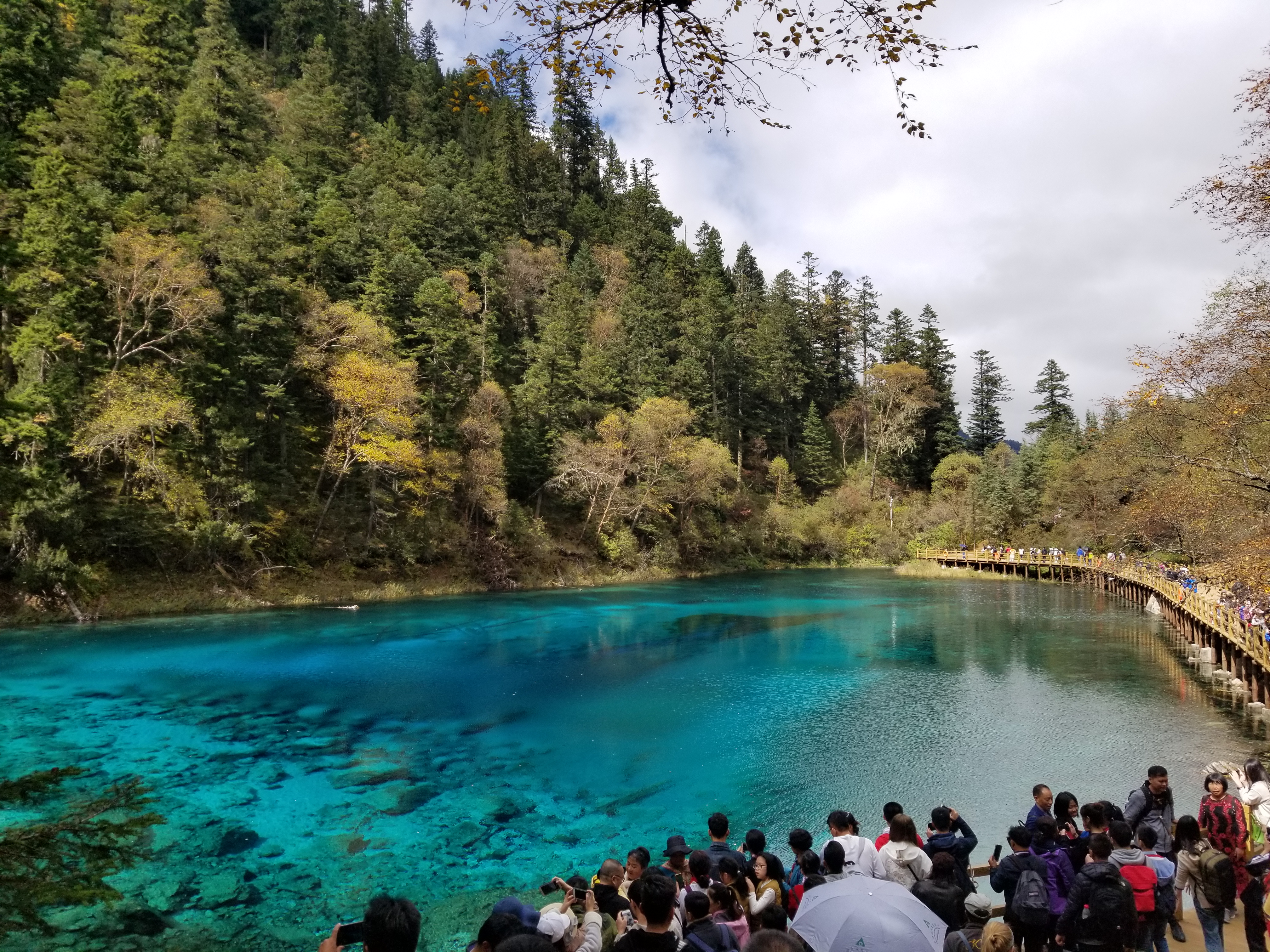
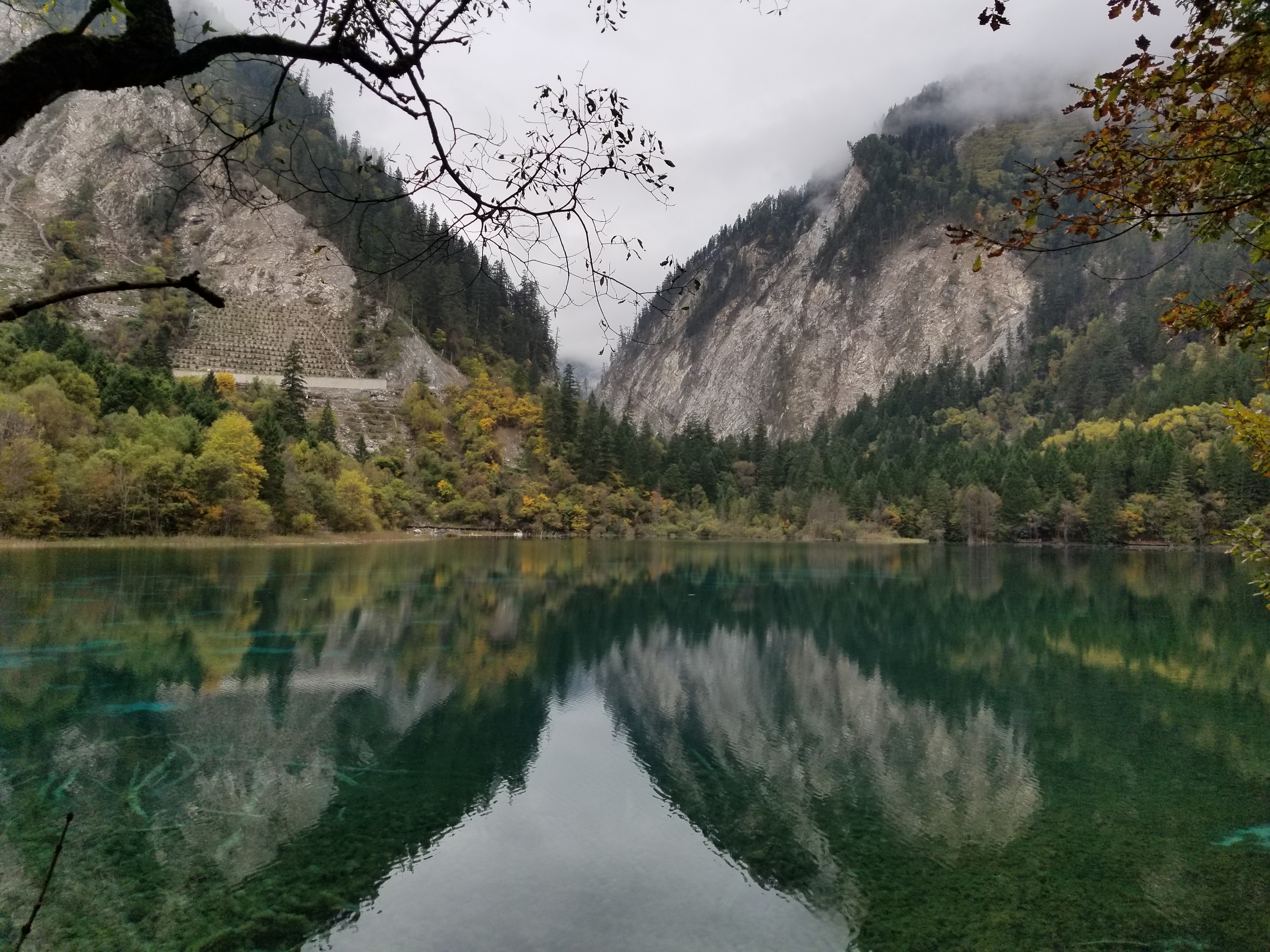
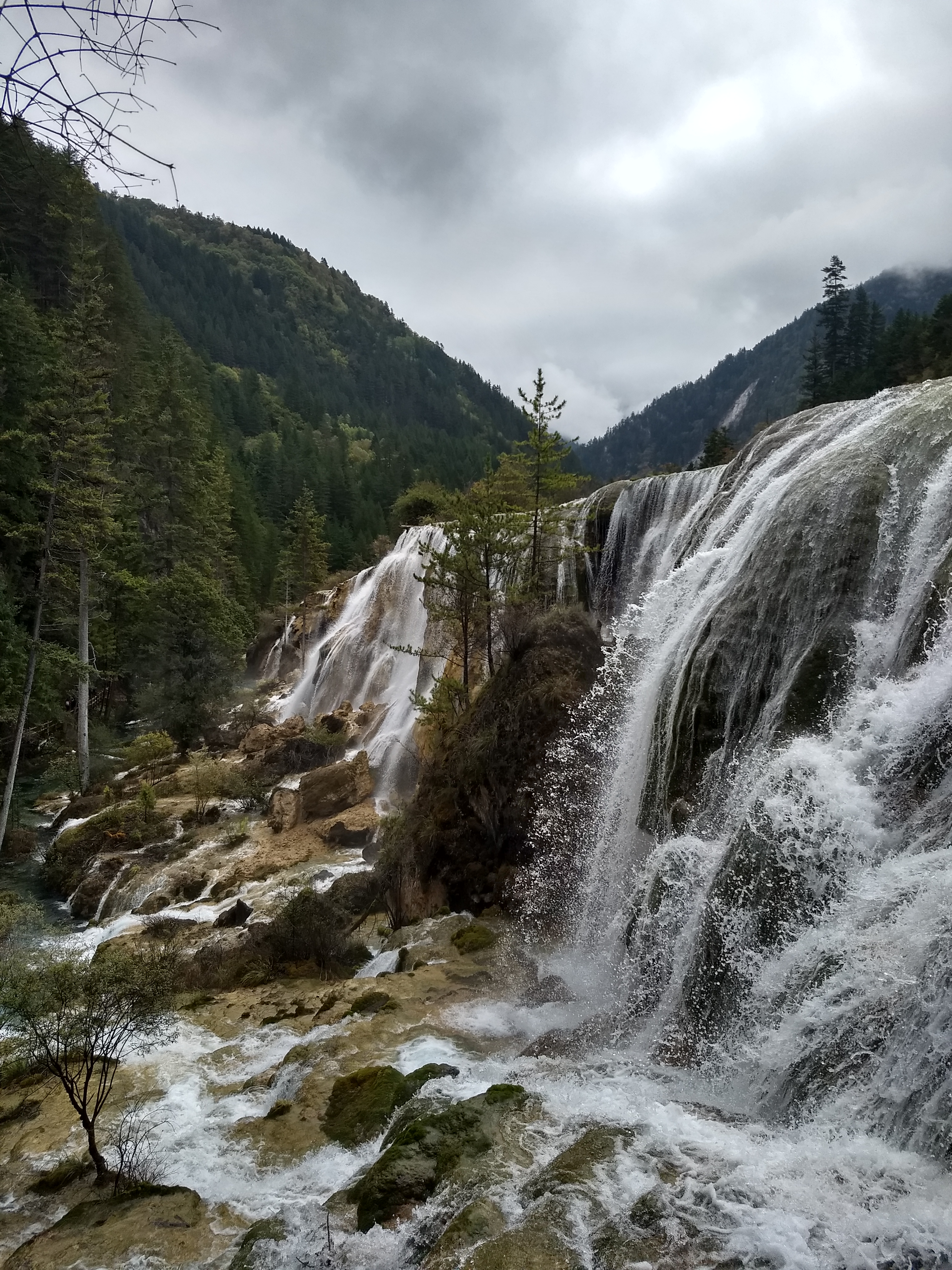
The park was stunning, and the entire experience remains one highlight of our time here. The weather was almost perfect, blessing us with warm (but not hot) temperatures, gentle clouds (but not rain), and sunshine at the perfect moments. As often happens on such walks, our group spent most of the time chatting – everything from politics to intentional poverty to the ethics of cloning! A wonderful time with friends, enjoying each other’s company and appreciating beauty all over the place.
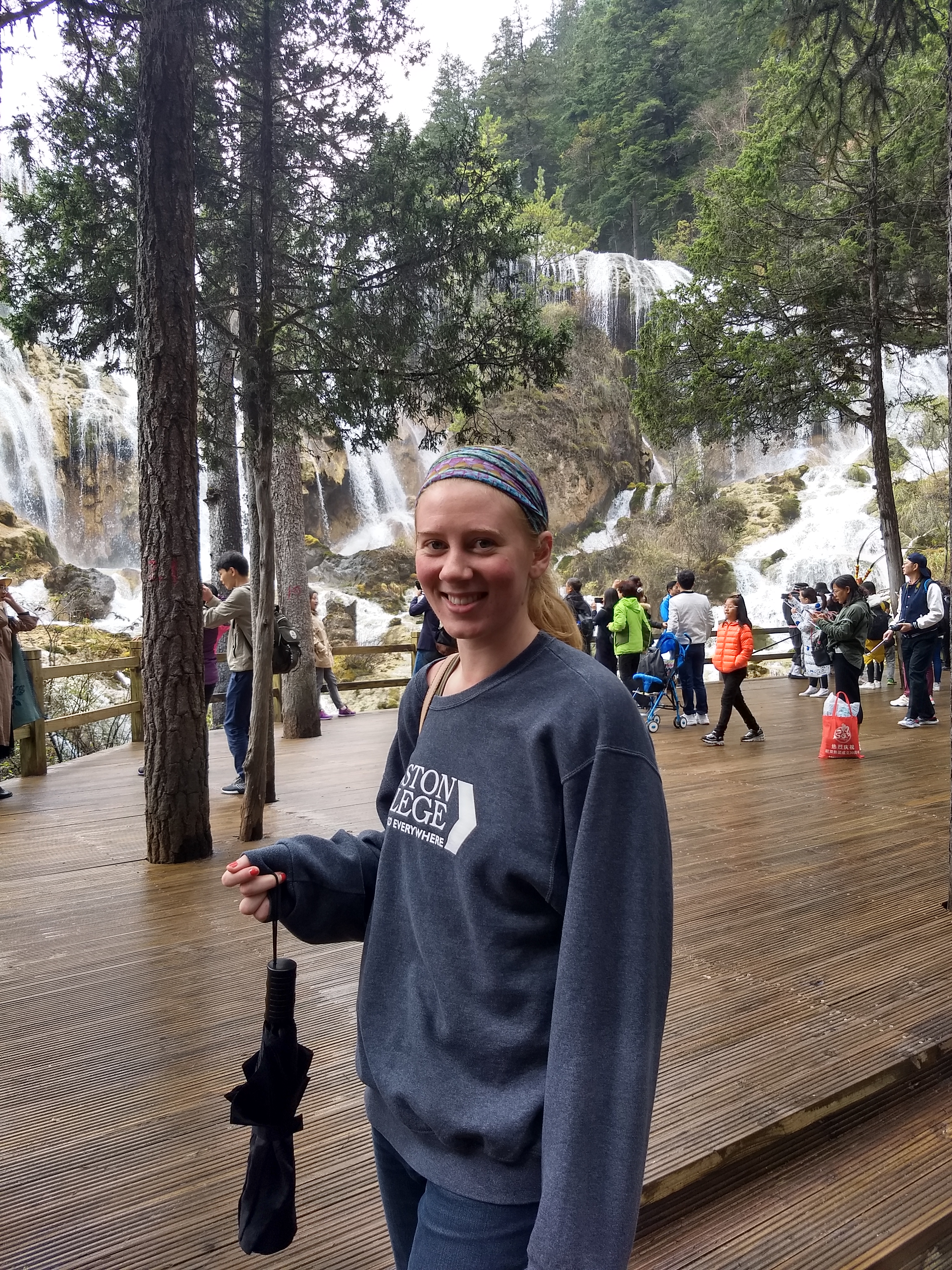
Note: unfortunately, weeks later but before we backed up pictures, Leigha left her phone on the public bus and had to replace it. So we lost a lot of our photos from the trip. Here are some of the pictures I’ve gathered from our comrades!







That evening, half our group – Andrew Troyer, Harrison Horst, and Emma Stutzman – departed for what we understood as a big bonfire event (“party”) while Leigha, Andrew Longacher, and I stayed at the hotel. We were planning to eat whatever food they provided for those who stayed back, but a couple young women from our group invited us to dinner at the restaurant across the street. We were hesitant at first – hard to turn down food you’ve already paid for – but eventually we decided to go for it.
(Oh, first I should say more about the food so far. We were caught totally off-guard by the level of the food on the trip. It’s hard to find Chinese food that we consistently don’t like – and especially multiple meals’ worth, and especially Sichuanese food – but somehow they did it. We’re pretty sure it’s part of keeping costs down (see four paragraphs below), but still. Even the Chinese people in our group were like “this isn’t Chinese food!” Anyway. There’s a hard line between enjoying the irony of this / finding companionship in confusion about the food, and just complaining at every meal, and I spent a lot of time thinking about the best way to walk that line.)
So when this group of young women invited us out – for some “real” 四川菜 or Sichuanese food – we were excited. We ended up having a wonderful meal with them, getting to know them a little more; one of them stepped up as leader/translator, had good English, and said she’s a doctor. The other three are nurses. We weren’t sure exactly where or how they work, (not at the hospital, they said, but we couldn’t catch where), but we understood enough. We talked a bit about their schooling and about our time in China. At the end, they told us that “we wanted to talk to you since the beginning of the trip, and we think it was our destiny to meet you.” (Oh, and the food? Delicious. Such a contrast. One of my favorite meals so far). To top it off, they paid for us, as is common when we eat with others (our status as teachers and foreign guests puts us high on the “let me/us treat you” list).

The ironic part of that night was when Andrew, Harrison, and Emma returned: it turned out they were not going to a bonfire, but some sort of show or presentation. It was cool, but didn’t include a meal, and we definitely had not understood what they were signing up for. (Later that night, we figured out that the words for “party” and “line” (as in queue) are the same, so we must have misunderstood what part of the trip the guide was talking about when we thought she was talking about this night. We made a couple assumptions from there, and, well… so it goes!)
The third and final day was the same as the first, with a few additions. Instead of busing straight back to Nanchong, which would have been a long day in and of itself, we made multiple lengthy detours to massive tourist traps. These included: a jade workshop (wherein we found pieces ranging from ~1000 yuan to ~500,000 yuan. You can look that up if you want to know how much it is in USD. It’s a lot); a traditional medicine/yak-products-fest combo (yak meat, yak milk, etc passing by for 10 minutes’ worth of walking – this one came with free samples, and was near lunch time! Yum); and a visit to a ‘traditional’ (but possibly tourist-y) Tibetan home, including a 30-minute speech that we understood very little of.
We knew these things were coming; they’re the reason the trip was so cheap for us. (We’re pretty confident it was cheaper to go through this travel tourism thing than if we’d just gone by ourselves). The company makes the trip itself dirt-cheap, but then spends half a day at the end parading you around to various shops, hoping you’ll buy one overpriced item and make the trip worth it.
And that was it! We didn’t get home until after midnight that evening, exhausted and ready for some rest after our vacation. What a unique and fun experience.
It was interesting, to say the least, to celebrate the holiday while knowing – or learning later – that protests in Hong Kong were ratcheting up a level for the day/week. Particularly striking was the first use of lethal police force (shooting an 18 year old protester) on the day those around us were “celebrating China’s greatness.” It’s a somewhat disturbing contrast, to imagine how big of a deal this is for HKers, and especially protesters, and to see how small of a deal it is around us in China. We have not heard anything about HK from Chinese people while we’ve been in China; to be fair, we don’t go around asking about it, since we’ve been told we shouldn’t, but considering we have students who are outspoken, and we have Chinese friends with whom we share meals and conversations… I don’t know. It’s just strange to recognize that the most notice many here will make of something so intense and long-lasting going on so nearby (globally speaking) will be the repercussions made against Blizzard, or the NBA – and knowing that many in America hear more than we do. Obviously things aren’t buzzing here, but there don’t seem to be even whispers – not that isolated foreign teachers get to hear, anyway.
Well! I guess that’s the note I’ll end on. Wasn’t sure where to put that thought. We encourage you to be in prayer for violence and chaos going on around the globe, whether it affects people you know or not, and to act for justice and peace in your communities however you can. If you want to pray for us as well, we would appreciate it: prayers for our students, our relationships with them and others, and our continually growing love for each other are always welcome. We are also in the middle of discerning what next year might look like for us, and are glad for prayers for wisdom and guidance.
And this is only a week’s worth of update and is still a month behind! So we hope to get another post out in the next week or so. We’ll see what happens.
In Christ,
Christian and Leigha